Why this is the right time of year
Q1 books are closed. Renewal calendars for the rest of the year are visible. And most CCaaS and PBX contracts roll on a 24- or 36-month cadence, which means a meaningful portion of the mid-market has a renewal event in the next 60-180 days. Catch the audit before the renewal arrives and you have leverage; catch it after and you're stuck for another term.
The framing matters because the typical buyer doesn't think "my voice contract" until something breaks. By then the renewal has auto-extended and the leverage is gone. A May audit, with a Q3 or Q4 renewal in sight, is when the math actually works.
Four audit checks that find the leak
1. License utilization vs. seat count
Pull your voice license count and your active-user count for the last 90 days. If you're paying for more than 1.10x your active users, you're funding ghosts. Layoffs, role changes, summer interns, contractors who left, all of it stacks up. We routinely find 12-20% of seats unaccounted for, and most contracts include a true-down clause that nobody on the buyer side ever invoked.
2. Bundled feature drift
Most CCaaS contracts include premium features (workforce management, analytics, AI assist, recording compliance) priced as bundles. Audit which premium features are actually getting used. The metric is not "does the feature exist on my license"; it is "did anyone touch it in the last 30 days." If you're paying for a $40-per-seat WFM module and nobody on your ops team can name the URL it lives at, you're done with that bundle.
3. Carrier and DID overhang
Numbers, toll-free, and routing minutes are the silent layer most audits miss. Old DIDs pointing to deactivated agents, toll-free numbers nobody promotes anymore, IVR overflow paths that should have been retired two years ago. We've seen mid-market accounts paying $400-1,200 a month for routing infrastructure that serves nobody.
4. Contract anniversary uplifts
Read your MSA for the price-uplift clause. Most CCaaS contracts allow a 3-7% annual uplift unless you re-negotiate. If you signed in 2022 and have rolled into 2026 without revisiting, you're now paying 12-30% more than the platform's current new-customer rate for the exact same service. The fix is a renewal-window pricing reset, not a platform change.
Two contract structures we negotiate every time
When we run a CCaaS or PBX renewal on a client's behalf, we anchor on two structural changes that most buyers leave on the table.
The savings rarely require a platform change. They require a careful read of what you signed.
True-down rights, not just true-up
Every CCaaS contract lets you scale up. A surprising number do not let you scale down. We negotiate a default 10-15% annual right-size allowance with 60 days notice, no penalty. That single clause has saved mid-market clients more in year-2 of a contract than the platform discount they negotiated at signing.
Capped uplifts and audit rights
Cap the annual price uplift at CPI or 3%, whichever is lower. Add a vendor-side audit right that lets you compare your effective rate to the platform's current new-customer rate at every renewal. Vendors will push back on the audit clause harder than on the price; that's how you know it's the one to hold.
What good looks like
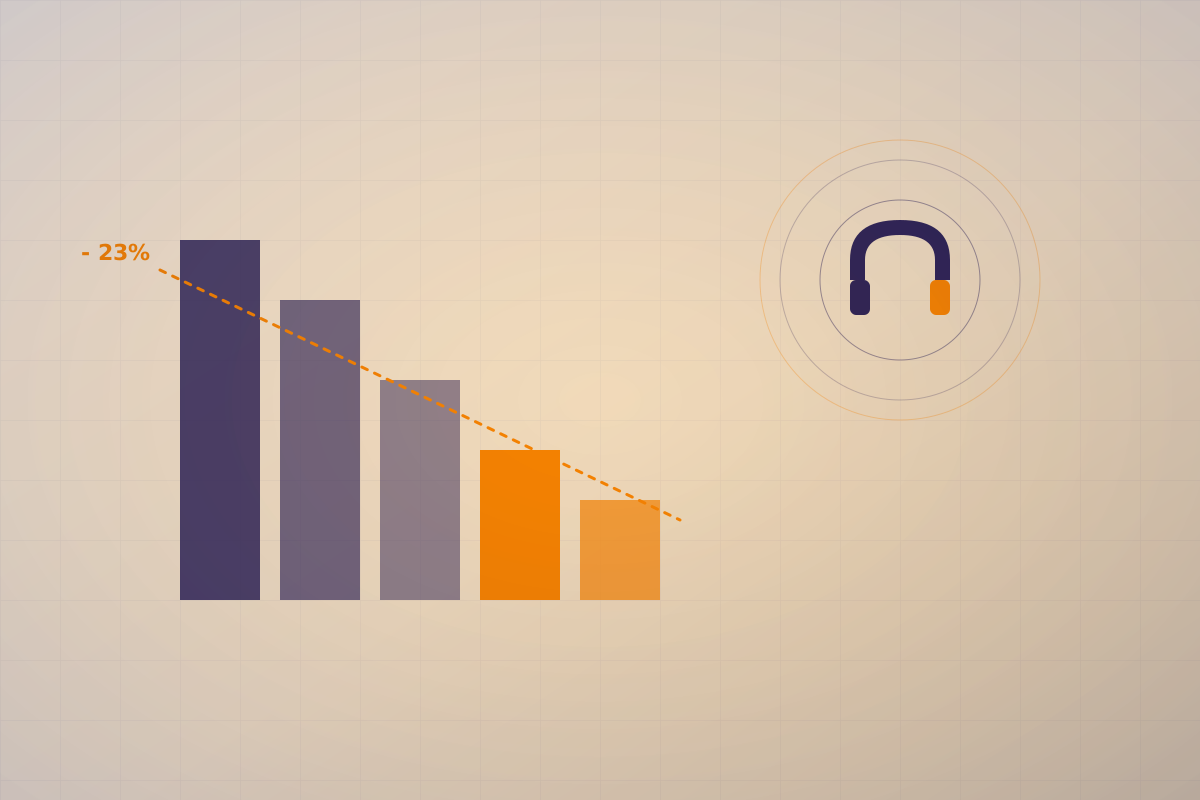
Of the engagements we close, the median outcome on a contact-center audit is a 15-22% spend reduction in year one without changing platforms, plus a renewal contract that holds the savings for the term. The cost of the audit pays back in the first quarter; the contract structure protects the rest.
If you'd rather have someone external do the audit, our advisory team runs them in 2-3 weeks per client. We bring the benchmarks. You bring the contracts.